People around the world woke up on the morning of March 1, 2026, to the news that the United States and Israel had launched a series of missile attacks overnight on Iran, sending the U.S. into another Middle Eastern war.
In the midst of hostilities, Iran effectively blockaded the Strait of Hormuz, putting a stranglehold on the narrow passage that normally sees the passage of 20% of the world’s oil supply daily. The effect was immediate and devastating, as oil prices rose precipitously and consumers began feeling the pain at the gas pump as the price of a gallon of gas nearly doubled within a matter of days.
Not surprisingly, accusations flew quickly regarding the cause of these price spikes. Many correctly understood the direct connection between the war in Iran and rising prices. Others sought to blame previous administrations, predatory oil companies, and any number of other scapegoats.
Some people did not understand why U.S. gas prices would rise so quickly, since we’re now a net exporter of oil. What these people and many others fail to understand is that oil and gas are traded in a global market that’s governed by the simple economic principles of supply and demand.
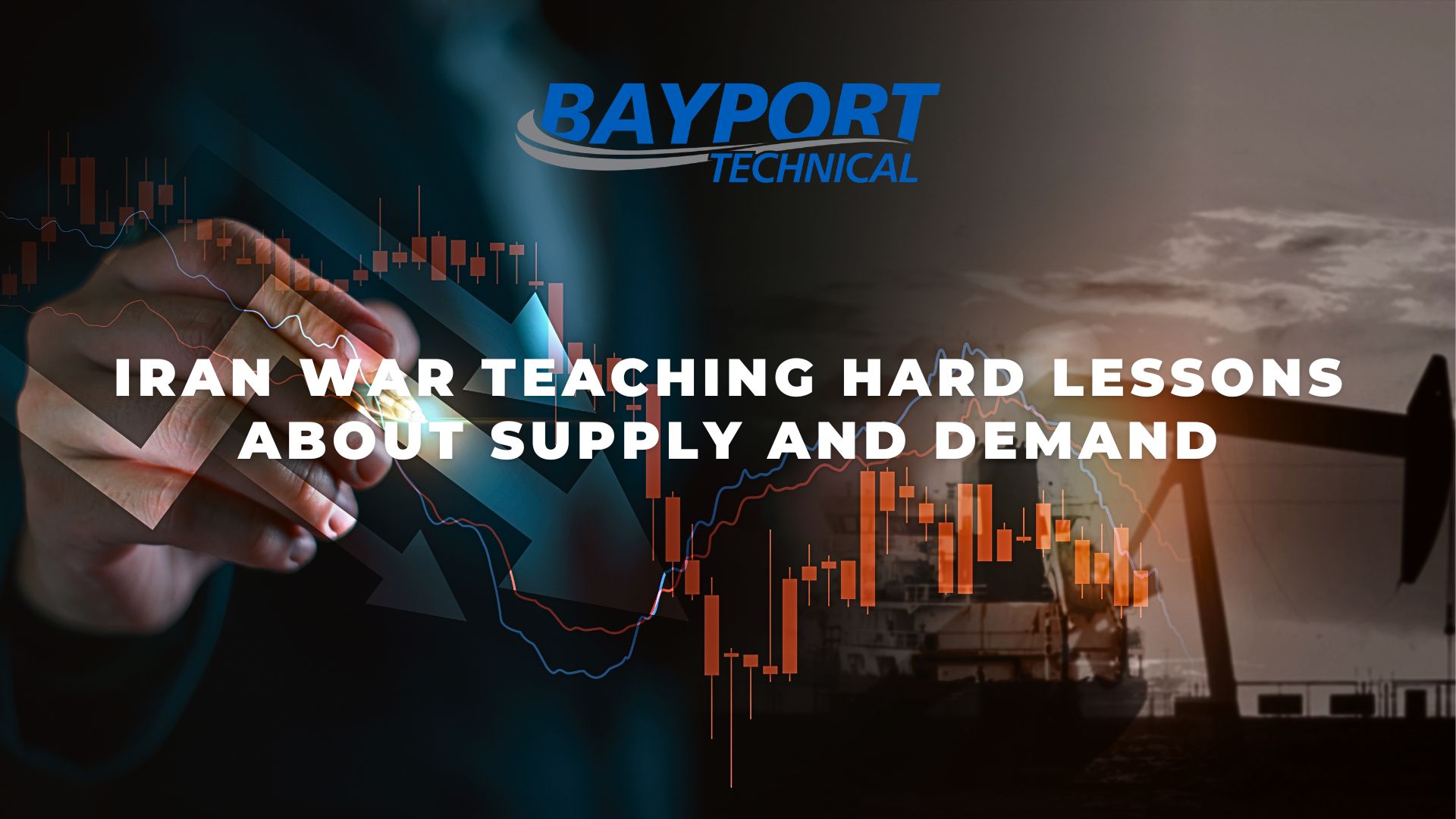
In our current situation, it’s the supply side of the equation that’s fueling the price spikes. Simply put, when demand stays steady, but supply diminishes, prices rise. And thanks to the Iran war, oil supply has taken a massive hit.
According to a recent CNBC article by Spencer Kimball, multiple oil executives have made it clear exactly how serious the impact of the Iran war has been on the supply of oil:
- In a recent report to investors, Shell CEO Wael Sawan explained that “[t]he hard facts are we have dug ourselves a hole of close to a billion barrels of crude shortage at the moment, either because of locked in barrels or unproduced barrels. And of course, that hole is deepening every single day, so the journey back will be a long one.”
- Halliburton CEO Jeffrey Miller “also estimates that oil production lost due to the war is trending toward a billion barrels” and that “[r]ecovery of oil and gas production and inventories will not be a quick or simple process.”
How serious is a billion-barrel crimp in the oil supply chain? Kimball notes that “[t]o put that number in context, the entire world consumes about 100 million barrels of oil every day, according to data from OPEC.” That’s why the International Energy Agency claims “[t]he oil market is facing its biggest supply disruption in history.”
For prices to go back down, we need to see an increase in supply, a drop in demand, or both. Sawan points out that “[d]emand destruction due to lost oil supplies have been modest so far.” However, that could soon change.
Unfortunately, the global oil market hasn’t seen the full impact of the Iran war quite yet. In March and April, ships that had left the Persian Gulf before the bombs began falling were still on the way to their destinations. Today, they’ve all arrived.
ConocoPhillips Chief Financial Officer Andrew O’Brien recently told investors that “[t]he impact of lost oil supplies from the Middle East will increasingly become more apparent, and fuel shortages could hit some countries this summer. Despite efforts that are ongoing to manage demand, we are going to start to see some import-dependent countries potentially start to face critical shortages as we get into the June-July time frame.”
That’s why so many are hopeful for a peaceful resolution as soon as possible that results in the re-opening of the Strait of Hormuz. However, even when an accord is reached, “it will probably take months for oil exports through the strait to return to normal after the conflict has ended.”
According to Chevron CEO Mike Wirth, not only do “hundreds of ships stuck in the Persian Gulf [] need to be redeployed around the world to normalize supply chains,” but “[t]he strait has to slowly be checked for mines in a laborious process.”
What effect will this unprecedented disruption of the global oil supply have on the U.S. oil and gas industry? In the short term, it probably means record profits for companies raking in record prices for each barrel of oil.
The long-term effects, however, remain uncertain. It’s certainly possible that U.S. companies will use the lessons of the closure of the Strait of Hormuz to entice more countries to import from the U.S. rather than the Middle East.
Regardless, one thing remains clear: the oil and gas industry isn’t going anywhere anytime soon. Even as oil and gas demand fluctuates, there will be no shortage of oil and gas jobs for the foreseeable future.
In fact, many oil and gas companies still struggle to hire the skilled workers they desperately need. Moving forward, companies will need to continue to hire skilled workers while also upskilling current workers.
So how do oil and gas companies improve their focus on technical skills? For new and current employees, the answer is technical training. Oil and gas workers need both fundamental knowledge and hands-on technical skills with real industrial equipment they’ll encounter on the job. Be sure to check out Bayport Technical’s wide variety of hands-on oil and gas training systems to take your oil and gas training to the next level!